Reflectance Dependent Models – Digital
Philtec Model DMS-D240
Technical datasheet for the Philtec Model DMS-D240 digital reflectance-dependent fiberoptic displacement sensor. Ø 6.1 mm target spot size for targets > Ø 6.1 mm, 76 mm total operating range, ambient light rejection, RS232 or USB output, and 0.15 µm Near Side / 0.25 µm Far Side peak-to-peak resolution.
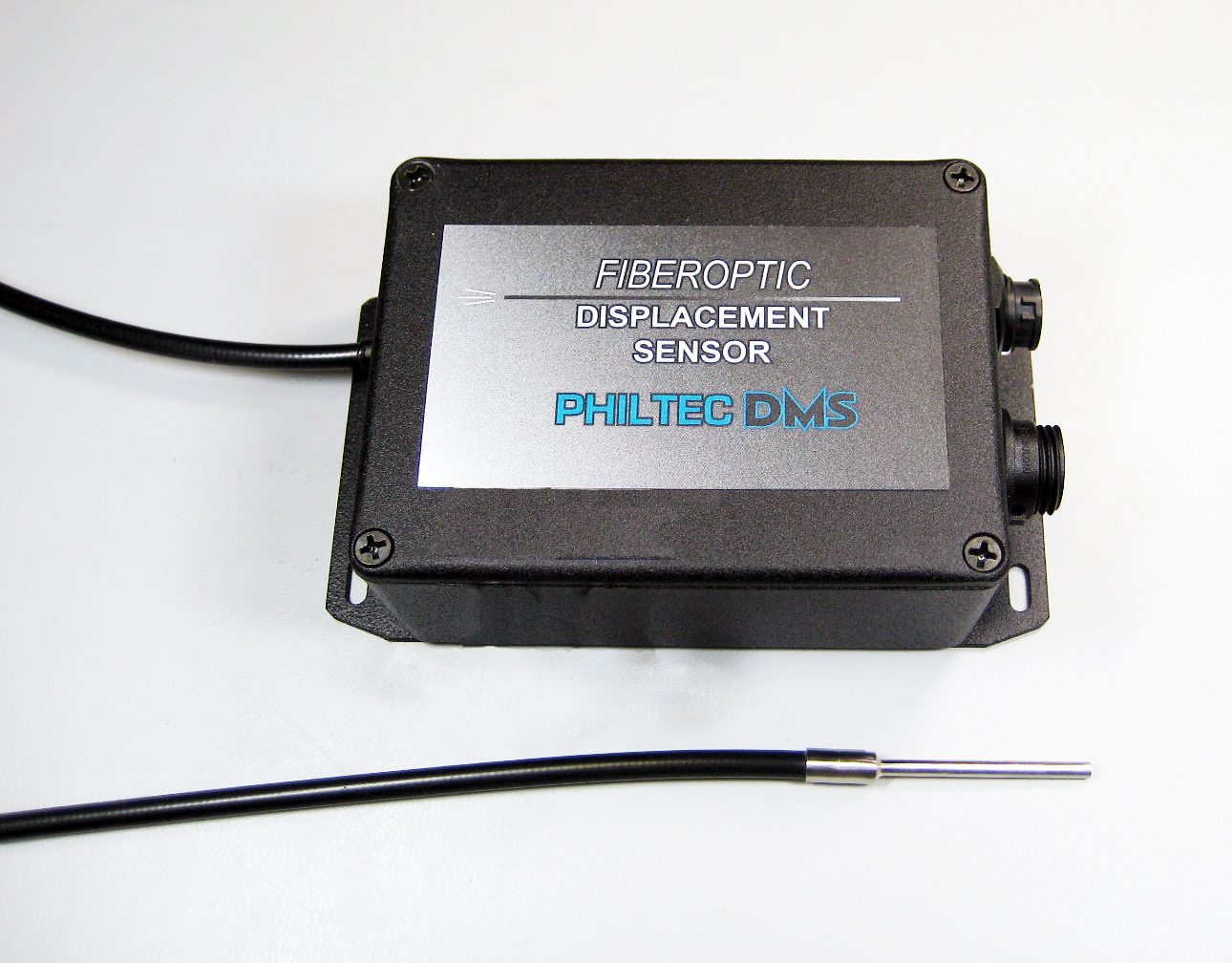
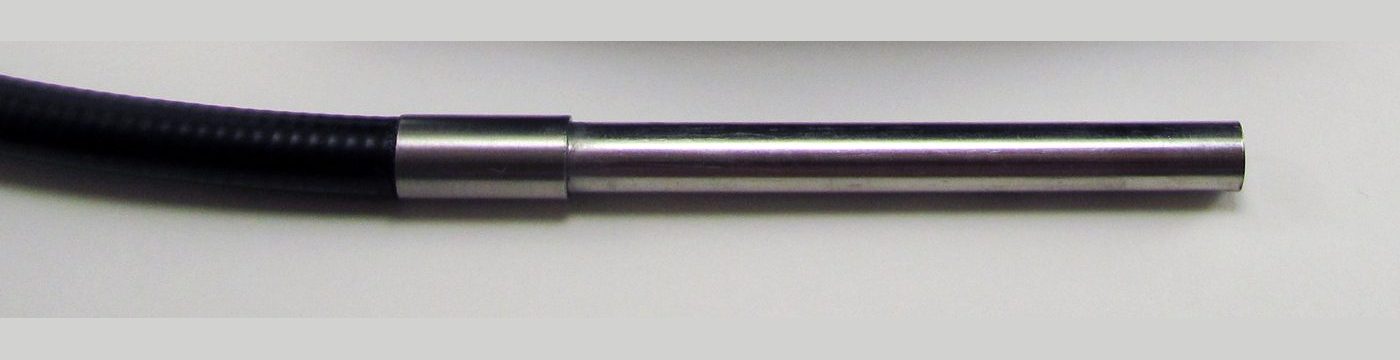
Technical datasheet for the Philtec Model DMS-D240 digital reflectance-dependent fiberoptic displacement sensor. Ø 6.1 mm target spot size for targets > Ø 6.1 mm, 76 mm total operating range, ambient light rejection, RS232 or USB output, and 0.15 µm Near Side / 0.25 µm Far Side peak-to-peak resolution.
Overview
The Philtec Model DMS-D240 is a reflectance-dependent digital fiberoptic displacement sensor engineered for measuring distance, displacement, and vibration of targets larger than Ø 6.1 mm (Ø 6.1 mm / 0.240 inch target spot size; fiberoptic diameter 6.1 mm) across a 76 mm total operating range with built-in ambient light rejection (incoming light bandpass filtered at 850 ± 22 nm). Dynamic light signals reflected from target surfaces are converted to linearized distance outputs by comparing incoming signals against gap calibration tables stored on-board the sensor.
The analog input function includes both Near Side (~1–10 mm optimum) and Far Side (~15–50 mm optimum) regions. Near Side operation delivers highest resolution (down to 0.15 µm pk-pk) over a 13 mm total/linear range, while Far Side operation provides moderate resolution (down to 0.25 µm pk-pk) over a 63 mm total/linear range. Output is proportional to both tip-to-target distance and target surface reflectivity.
- Near side (~1–10 mm optimum): 13 mm total/linear range delivering resolution down to 0.15 µm pk-pk.
- Far side (~15–50 mm optimum): 63 mm total/linear range with 0.25 µm pk-pk resolution at 2.5 S/s.
- Ambient light rejection: bandpass filtered at 850 ± 22 nm.
Specifications
Standard specifications — Model DMS-D240 (USB or RS232)
| Parameter | Near Side | Far Side |
|---|---|---|
| Total range | 13 mm | 63 mm (76 mm combined) |
| Linear range | 13 mm | 63 mm |
| Optimum gapping region | ~1 – 10 mm | ~15 to 50 mm |
| Reflectance resolution | 0.5% | |
| Temperature resolution | 0.06 °C | |
Peak-to-Peak Resolution* vs. ADC Averaging & Sample Rate
| ADC AVG | Samples / Sec | Near Side Pk-Pk Resolution* | Far Side Pk-Pk Resolution* |
|---|---|---|---|
| 2 | 5,208 | 2 µm | 6.5 µm |
| 16 | 651 | 1 µm | 2.5 µm |
| 256 | 41 | 1.25 µm | 0.8 µm |
| 4096 | 2.5 | 0.15 µm | 0.25 µm |
Tip and cable dimensions
| Feature | Metric (mm) | Imperial (inch) |
|---|---|---|
| Tip outer diameter (Ø C) | 7.92 | 0.312 |
| Fiberoptic diameter | 6.1 (spot size: 6.1 mm) | 0.240 |
| Tip length (C) | 76.2 | 3.0 |
| Collar length (B) | 19.1 | 0.75 |
| Collar diameter (Ø B) | 9.53 | 0.375 |
| Cable length (A) | 914 | 36 |
| Cable diameter (Ø A) | 8.6 | 0.340 |
| Cable min. bend radius | 40 | 1.6 |
Electronics
| Light source | 850 nm |
|---|---|
| Input voltage | +12 VDC |
| Input current | 500 mA max |
| Bandwidth | 5 kHz |
| Isothermal drift | 0.05% |
| Internal clock rate | 10,416.75 Hz |
| Weight | 1.2 kg (2.8 lbs) |
Fiberoptics
| Light beam spread | 25° |
|---|---|
| Fibers | Glass |
| Cable sheathing | PVC / Steel Monocoil |
| Tip epoxy outgas | 0.3% @ 200 °C; 2.4% @ 300 °C |
| Tip operating pressure | 15 bar |
| Tip operating temperature | −55 to 200 °C continuous; to 300 °C intermittent (1–2 hours) |
*Pk-Pk Resolution is the smallest measurable displacement limited by the sensor’s self-noise. Specifications represent best-case performance where: the target is flat, smooth, and highly reflective; the sensor is perpendicular to the target; the sensor is gapped to its range of highest sensitivity (~mid-range); and fiberoptic cable lengths are standard with unconnectorized cables.
DMS Control Software includes a data averaging filter from 2 samples (fastest rate) to 4096 samples (highest resolution). Internally, the sensor reads target data continuously at 10,416.75 Hz: Samples/Sec = 10,416.75 / ADC AVG.
Linearized Digital Output & Accuracy
- 1:1 linearized distance output across Near Side (13 mm) and Far Side (63 mm) regions.
- On-board calibration tables convert reflected light intensity directly into gap distance.
- Accuracy is a measure of the sensor’s repeatability, measured at 2.5 samples/sec.
- Best performance is achieved on the steepest slopes: Near Side (~1–10 mm) and Far Side (~15–50 mm).
Interactive Sample Rate & Resolution Calculator
2.54 Samples/Sec · Near: 0.15 µm · Far: 0.25 µm
Three Instrument Enclosures to Choose From
Model mDMS-D240
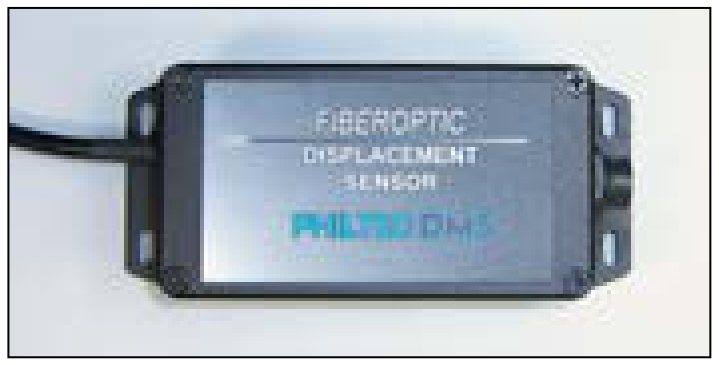
miniDMS single-channel digital sensor with RS-232 serial communication.
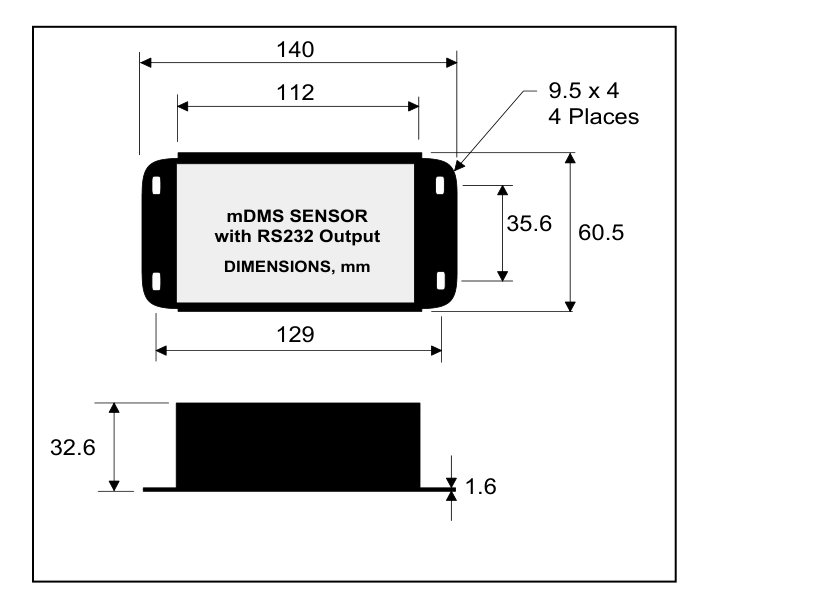
| Overall length | 140 mm |
|---|---|
| Body L × W × H | 129 × 60.5 × 32.6 mm |
| Mounting slots | 112 × 35.6 mm (4× 9.5 mm) |
Model muDMS-D240
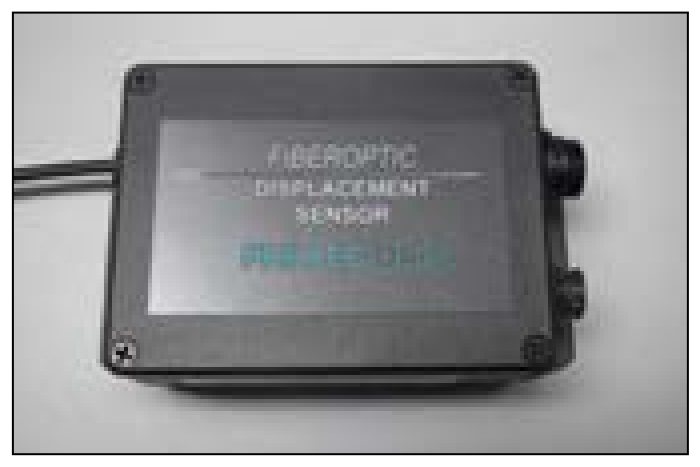
miniDMS single-channel digital sensor with USB communication.
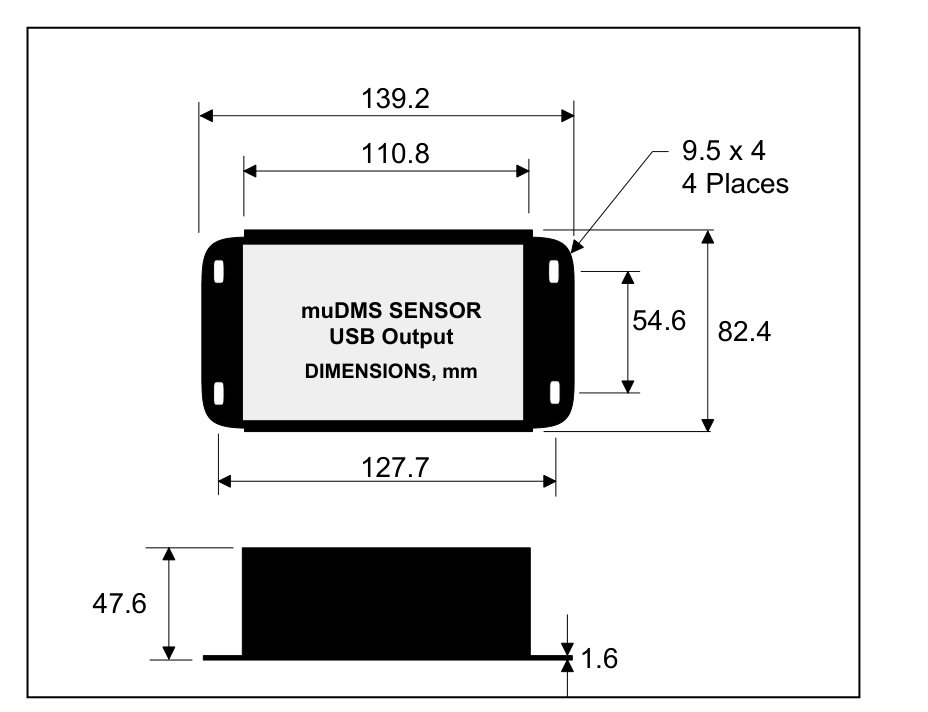
| Overall length | 139.2 mm |
|---|---|
| Body L × W × H | 127.7 × 82.4 × 47.6 mm |
| Mounting slots | 110.8 × 54.6 mm (4× 9.5 mm) |
Model mu2DMS-D240
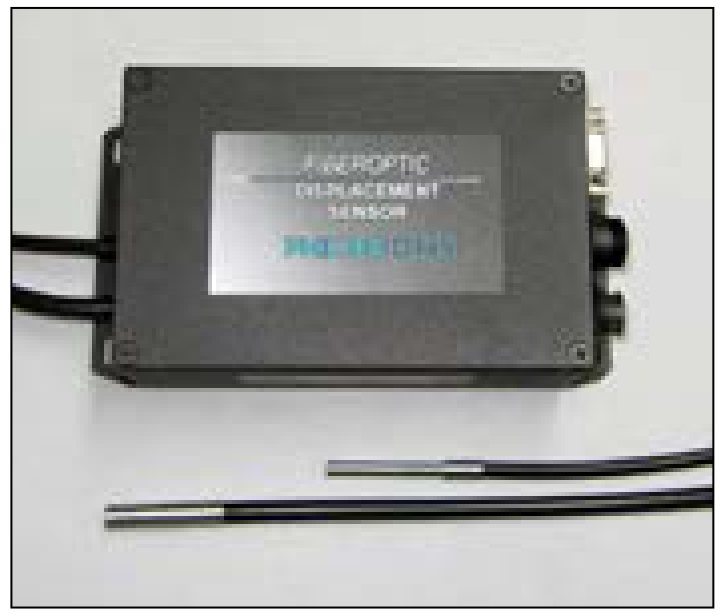
Two-channel digital DMS instrument with both USB and RS232 outputs.
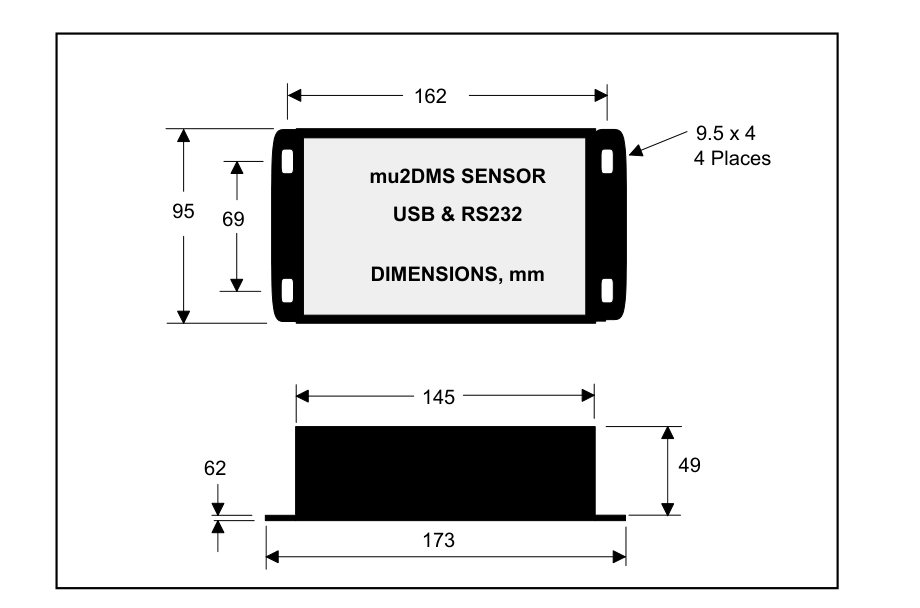
| Overall length | 173 mm |
|---|---|
| Body L × W × H | 162 × 95 × 49 mm (62 mm w/ conn.) |
| Mounting slots | 145 × 69 mm (4× 9.5 mm) |
DMS Setup & Control Software
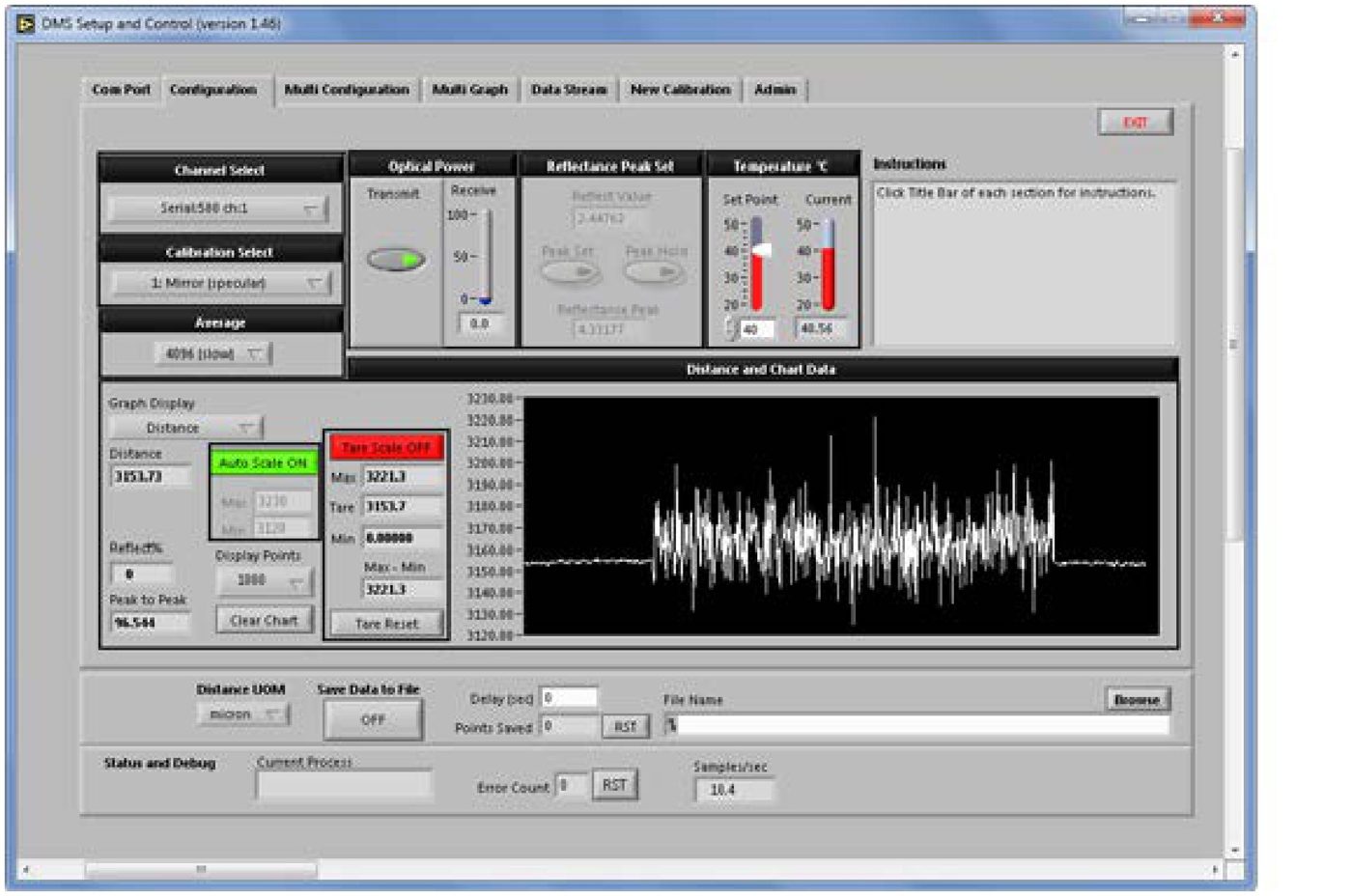
On-board Calibration Tables & Freeware
Philtec provides freeware with every digital sensor purchase for controlling sensors, viewing live distance/reflectance data, and saving measurements to files.
- 25 calibration table slots: stored directly on-board the sensor.
- Factory pre-loaded tables: (1) Front surface mirror and (2) Diffuse aluminum target.
- Custom tables: copy/paste calibration data or create and store new target calibration tables.
Software, Firmware & Contact
DMS sensors can be updated remotely from any PC. Download the latest software, firmware, and tutorial videos at www.philtec.com/downloads/firmware-software.
| Manufacturer | PHILTEC, Inc., Annapolis, MD USA |
|---|---|
| Phone / Fax / Email | 410-757-4404 · Fax 410-757-8138 · sensors@philtec.com |
Frequently asked questions
What is the difference between Near Side and Far Side operation on the DMS-D240?
Near Side operation (13 mm total/linear range, optimum ~1–10 mm) uses the steep rising slope of the analog input curve to achieve peak-to-peak resolution down to 0.15 µm at 2.5 S/s. Far Side operation (63 mm total/linear range, optimum ~15–50 mm) provides moderate resolution (0.25 µm at 2.5 S/s) over a wider operating range.
How does ADC averaging affect sample rate and resolution?
The sensor continuously samples internally at 10,416.75 Hz. Setting ADC AVG averages between 2 and 4096 internal readings before sending data out to the PC (Samples/Sec = 10,416.75 / ADC AVG), trading sample speed (5,208 S/s down to 2.5 S/s) for ultra-low peak-to-peak noise.
Which model variant should I select for USB vs. RS232?
Select mDMS-D240 for single-channel RS232 communication, muDMS-D240 for single-channel USB communication, or mu2DMS-D240 for two-channel operation with both USB and RS232 outputs.